
How Long Does It Take to Become an Electrician?
Becoming an electrician is a reliable and rewarding career choice but many beginners ask one key question: how long does it take to become an electrician? From electrician school length and apprenticeship duration to licensing and certification this complete guide explains every stage of the electrician career path in the USA. Whether you’re starting from scratch or planning to become a journeyman or master electrician you’ll find clear timelines requirements and expert insights to help you plan your future with confidence.
Electrician Training: How Long?
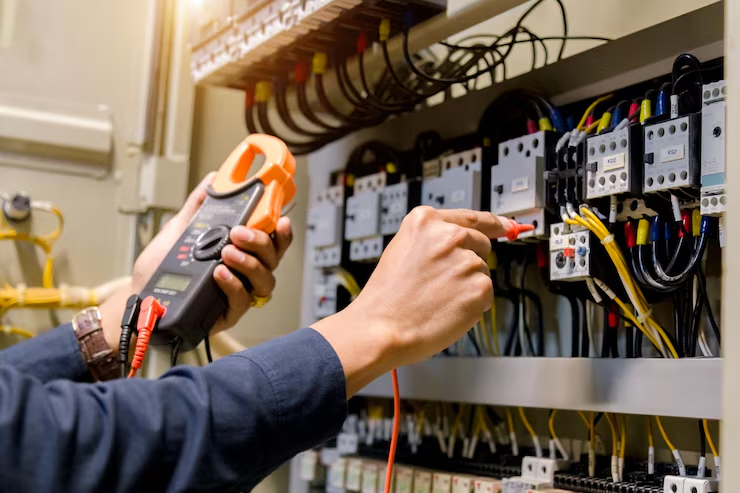
The length of your training as an electrician is based on the specific path you choose and on the licensing requirements of your area. Usually, the very first step of an electrician’s career is through either a trade school or a pre-apprenticeship program which lasts anywhere from 6 months to a year. Then, the hopefuls go through a paid apprenticeship which spans from 4 to 5 years. This training is a mixture of lectures and practical experience under supervision in the field, thus you get to know electrical theory safety regulations and the skills that are really necessary to get a license for work as an electrician. If you are working in Orange County then this timeline gets you ready not only for the local but also for the California state requirements while gradually acquiring the trust of customers as an electrician in Orange County. To sum up, it usually takes 4 to 5 years in total to become an electrician who is fully trained and ready for licensing, which leads to a stable and continuously demanded career in the electrical trade.
Overview of Electrician Career Path
Before we dive into timelines let’s look at the typical path to becoming an electrician:
- Basic Education and Pre‑Apprenticeship Training
- Apprenticeship Program
- Hands‑On Experience
- Licensing and Certification
Each of these steps requires time effort and sometimes investment in tuition or tools. The full process can vary depending on location personal pace and chosen route.
Electrician Training Duration
The total amount of training required to qualify electrician profession is determined by the chosen route and the regulations of the local licensing authority.The pre-apprenticeship or technical school programs for initial training can last from 6 months up to 1 year, depending on which one you choose. Apprenticeship programs that are comprehensive and encompass both learning in the classroom and working practically usually take around 4 to 5 years to complete.
Thus in a realistic timeframe it is 4 to 5 years of schooling and hands-on experience that you will have to endure from the very start until the very first electrician license is issued to you.
Electrician Apprenticeship
The apprenticeship is the foundation of your electrician career and usually includes:
- Classroom instruction on electrical theory, safety and code regulations
- On the job training under supervision
- Paid work experience
The majority of the apprenticeship programs demand that you spend 8,000 hours in total on the job training and around 576 hours in the classroom. The given arrangement makes it possible for you to acquire hands-on skills and receive a salary at the same time.
Licensing Requirements
Gaining the status of a certified electrician is a long road that goes beyond merely training; in certain areas, it is also a prerequisite to complete all hands-on experience successfully take a local electrical code test and then afterwards apply for a license from the respective authority or trade board. Just as a professional licensed plumber must very strictly follow local regulations before achieving self-employment so too might the requirements for getting an electrician’s license vary from place to place or even from one country to another. Hence, it is always of the utmost importance to find out and follow the licensing and compliance rules that apply in your area before starting to work professionally.
Timeline to Become Different Levels of Electrician
Here’s a quick breakdown of how long it takes to reach various levels in the electrician profession:
| Level | Approx. Time |
| Entry‑Level Electrician / Trainee | 6 months – 1 year |
| Apprentice Electrician | 4 – 5 years |
| Journeyman Electrician | 4 – 5 years + exam |
| Master Electrician | 2 – 4 more years (after journeyman) |
Master electrician status often takes additional experience and examinations beyond initial licensure.
Factors That Affect Duration
Several factors can influence how long it takes to become an electrician, including:
Program type: Trade school vs community college
Work hours:Full‑time vs part‑time training
Prior experience: Previous construction or electrical work
Local licensing rules: Some regions require more training hours
Being flexible and proactive can help you complete training faster and begin working sooner.
Trade School vs Apprenticeship
Both trade school and apprenticeship programs are valid paths but they differ:
Trade School
- Provides foundational knowledge
- Shorter time frame (6 months to 1 year)
- Helps you qualify for apprenticeship
Apprenticeship
- Combines paid work + classroom learning
- Takes longer (4 to 5 years)
- Direct pathway to journeyman and licensing
Many future electricians choose trade school first to build strong basics before entering an apprenticeship.
Average Duration Summary
Usually, the entire procedure for an electrician’s license takes about four to five years. This period includes the whole duration of a properly supervised apprenticeship, the least amount of hours for working under supervision and the time spent studying for the state licensing examination. During this time, the future electricians get a solid background in topics such as electrical theory, safety regulations, code compliance and hands-on problem solving. Just like a professional house painter develops practical skills before taking on independent work, the majority of electricians at the end of this period are fully qualified, legally licensed and ready for a career that is stable, in-demand, and well-paying in the electrical trade.
Career Outlook
Especially when there are ongoing building projects as well as the development of infrastructure, electricians always find work. Their profession is anticipated to be in demand, and even more so with the developing areas of energy renewables, smart technology, and industrial automation being gateways to new job openings with quick growth. Electricians currently receive good salaries and benefits in many fields, then installing hardwood flooring becomes another skill that adds value to construction projects.
How Long is an Electrician Apprenticeship?
If you have to think about an electrician career one of the most important stages is to do an electrician apprenticeship. On the other hand you may wonder: how long is an apprenticeship or how long does it take to become an electrician? and what is the way? This manual will provide a simple illustration of the process so that your journey will be mapped out in a proficient manner.
What is an Electrician Apprenticeship?
An apprenticeship for electricians is a training scheme that consists of various levels and blends hands-on work with theoretical instruction. Its goal is to provide the upcoming electricians with the right skill set to work safely with electrical systems in different environments such as homes, offices, or factories taking care of installations, maintenance, and repairs. For example, the unions representing the trades, the contractors of electricity, and the technical schools usually sponsor the apprenticeship program in Los Angeles, thereby giving the local trainees the opportunity to work on the actual job sites. These programs are making it possible for you to earn while learning and thus they are becoming a realistic and career-oriented option for many people, then contact a local lock smith to expand security skills.
Duration of an Electrician Apprenticeship
In many places, an apprenticeship for an electrician will last 4 to 5 years depending on where you are and how the programs are set up.
- Classroom instruction: This ranges from 576 to 1,000 hours in duration for the program.
- On-the-job training: Under a licensed electrician’s supervision the total stands at around 8,000 hours.
This combination makes sure they obtain theoretical knowledge as well as practical experience thus aiding them in passing license exams and becoming a successful electrician.
Structure of Apprenticeship
The training for electricians’ apprenticeships is typically conducted in multiple years or phases, and each year adds more skills and duties:
1st Year: Theoretical basics of electricity, safety and supervision of practical works
2nd and 3rd Years: Deal with the professional current circuits, wiring systems and do troubleshooting of the equipment
4th and 5th Years: In addition to administering the complete licensing exam, dirty hands on massive installations and industrial systems
In general terms, the instruction will consist of school-supported training (which is mostly conducted in the evenings or at weekends) combined with paid work experience during the day. This hybrid training will allow you to take on more responsibilities steadily, then hire a trusted general contractor to oversee projects efficiently.
Licensing During/After Apprenticeship
In certain states, a beginner is authorized to gain hands-on experience by assisting a licensed electrician, but in most cases, this option is out of the question if the beginner has not acquired a journeyman license. Upon finishing your apprenticeship, then you can do residential electrical works as a new swimming pool installation, apply for the license with the appropriate authority in your state or municipality, and have your application processed. Take the journeyman electrician exam that assesses your knowledge of the National Electrical Code (NEC) safety rules and electricity’s characteristics. Certain areas might require you to take continuing education as a part of the license renewal process and for keeping yourself up to date with electrical standards.
Factors That Can Affect Duration
The length of your apprenticeship can vary in different ways due to numerous factors:
- Program type: Union vs non-union programs may have different hour requirements
- Part time vs full time participation
- Prior experience or education in electrical work
- Local regulations that may require additional training hours
- Graduality in study and time elasticity to finalize the coursework or working hours.
Being proactive and dedicated can sometimes allow apprentices to complete the program slightly faster than the standard timeline.
Pros of Completing an Apprenticeship
Electrician training for some reasons is ever so valuable:
- Earn while you learn: Paid work experience offsets training costs
- Hands skills: Real-world experience makes you job ready
- Licensing pathway: Expect the creation of a journeyman station followed by master electrician station.
- Networking opportunities: Connect with experienced professionals and contractors
Getting an apprenticeship has long been regarded as the best way toward a long term career in an electrical career.
Alternative Routes
Though apprenticeships are encouraged other avenues remain open for exploring:
- Trade or technical school programs: Ideally, one should decrease the classroom based section of the training, though it almost always requires considerable on the job experience.
- Military training: It gives electrical training programs which include courses that give credit toward licensure.
- Accelerated programs or dual enrollment: Concurrent programs balance work experience with an accelerated format for schooling.
There are pros and cons to every one of them depending on the amount of time, cost and type of learning needed.
Quick Reference
- What it is: Paid work is good classroom instruction.
- Duration: Paid work 4 to 5 years (8,000+ hours on the job 576+ hours classroom)
- Structure: Climbing from basic to advanced skills from year to year.
- Licensing: Licensed as a Journeyman fitter after taking an exam.
- Factors affecting duration: Program type, work schedule, prior experience and local regulations
- Pros: Paid training, hands-on skills, direct licensing path and networking
- Alternatives: Trade schools, military program and accelerated pathways
Becoming an electrician through apprenticeship is regarded as a trustworthy and systematic course to secure a good employment position. Understanding the steps and requirements, then hiring a skilled handyman for related home electrical tasks, will enable you to make an informed decision and start your journey as a certified electrician.
How Long Does It Take to Become a Certified Electrician
Getting an electrician’s certificate is a great decision for people who want to join a profession that is still widely recognized and safe, providing a constant influx of opportunities for development. If you are in the US, it is imperative to know the duration, the steps and the requirements for certification prior to embarking on your journey. We have broken down the whole process into simple and easy-to-follow steps in this guide.
The term certified electrician refers to a qualified individual who has completed all the educational, training, and licensing stages successfully and thus is authorized to work alone and legally on electrical systems. The certification assures that the electrician is capable and familiar with the different safe installation repair and safety compliance methods. In Riverside and comparable areas the certification not only helps in adhering to the local rules but also permits residents and companies to involve a dependable trusted local interior designer in their project planning relying on the electrician’s skill and trustworthiness.
Steps to Become a Certified Electrician
The process to certification usually involves:
- Complete High School or GED: Foundational math, science and technical skills are required.
- Enroll in Electrical Training: Attend a trade school, technical college or pre apprenticeship program.
- Apply for an Apprenticeship: Gain hands on experience while working under a licensed electrician.
- Complete Required Hours: Most certifications require 4,000 to 8,000 hours of on-the-job experience depending on the rules of the state!.
- Pass the Licensing Exam: An exam designed to check your knowledge of electrical code, safety practices and electrical theory.
These guidelines will give one an easy clear journey on the pathway toward one’s way to certification and employment.
Electrician Certification Overview
In the USA, the regulation of electricians’ certification is done often on a state or local basis. The certification affirms that the electricians are qualified to carry out their work dependently and legally in residential commercial or industrial areas and can coordinate efficiently with a certified appliances expert nearby for integrated home or office solutions. There are different levels including:
- Journeyman Electrician Certification: It is a formal recognition for solo practice, and it’s granted by professional societies.
- Master Electrician Certification: Certification that is advanced and assigned for complexes projects and leadership positions .
Attaining certification not only adds to one’s credibility but also leads to improved remuneration and advancements in career prospects.
Timeline to Certification
As per the type of electricians they tend to be test takers have to develop abilities to identify what emphasis is placed for each electrician type:
- Trade School Route: Classroom instruction should be administered for a period of one year together with any other programs and services mentioned throughout this document.
- Apprenticeship Route: Any such records must be retained under the established retention policy.
Before being qualified as an electrician an individual is expected to give two to three years toward the endowment of knowledge mostly in the performance.
Apprenticeship and Certification
An apprenticeship is a critical component of certification. It provides:
- Real-world supervised electrical work
- Structured learning of electrical systems and codes
- Paid experience while completing classroom hours
Typically, apprenticeships need 8000 hours of practical training and about 576 hours of in class teaching which will prepare you well for the certification exam. In fact the latter is going to be easy.
Licensing Exams
After completing your apprenticeship and required hours you must pass a licensing exam. This typically includes:
- National Electrical Code (NEC) knowledge
- Electrical theory and calculations
- The protocols for safety and compliance
The successful completion of the examination grants you the certified electrician title and gives you the freedom to work alone legally.
Factors That Affect Duration
Many factors influence the time after which certification is attainable:
- Program type: Trade school vs direct apprenticeship
- Prior experience or education: in construction or electrical work
- State-specific requirements: for hours and exams
- Personal pace of learning and exam preparation
Sometimes your certification path can be shortened by running ahead of the pack and acting.
Benefits of Becoming Certified
There are many benefits in becoming a certified electrician.
- Higher earning potential compared to non-certified electricians
- Job security in a growing trade
- Eligibility for advanced positions like master electrician or contractor
- Dependability in the eyes of the clients and employers
Certification also keeps practitioners updated about the newest codes and safety standards for electrical connections.
Alternative Paths
Although the traditional method of internships is the most common other different ways include:
- Trade schools with fast-track programs Classroom-based learning with credit toward work experience
- Military training programs: Provides electrical training and hours applicable for certification
- How Programs Offered at Community Colleges Combine Classroom Study with Internship Program Opportunities
An aspiring professional is free to make a well-informed choice on how to go through the whole process considering his or her schedule finances or preferred methods of learning and at the same time weighing the pros and cons. As the person who wants to become a professional is being trained he or she may find it useful to apply reliable stone and marble care techniques recommended throughout the process of getting hands-on training which would guarantee that the amount of the person’s skill in the area will be just right for the residential and commercial projects based on the high standards.
Electrician School Length: How Long Does It Take to Complete?
In case you are considering embarking upon a career in the electrical trade it is likely that you have already questioned the duration of the schooling for electricians? It is very important that you find out first the average length of the schooling, the courses you will take and the process of becoming certified before making a commitment. So, we will unfold for you all the details related to the electrician school like its duration and how it can fit into your career.
Electricians are in high demand and there are openings in homes, commercial areas and manufacturing units. Typically a fresh electrician passes through an electrician school which is a center imparting elementary information hands-on skills and a means to get into trainee positions and licenses. Understanding HVAC systems and installation techniques during this training helps you plan your education and professional life smartly, ensuring you gain skills that are highly valued across multiple industries.
What is Electrician School?
Electrician school is a technical training program that is specialized and aimed at teaching students the skills required for a career in electrical work. The topics included in such programs are:
- Electrical theory and circuits
- Safety practices and code compliance
- Wiring systems, troubleshooting, and installation techniques
Contrary to apprenticeships, the latter being mainly learning on the job, electrician school imparts teaching in the classroom that grounds the theory for doing well in the trade.
Electrician School Length / Duration
The duration of electrician school can vary drastically depending on the specific program one selects and the pace at which they intend to study.
- Full-time programs: 6 months to 1 year
- Part-time programs: 1 to 2 years
There are some programs that speed up the training of students, and there are others that fit the schedule of working students or those with other commitments. Generally, students take 9 to 12 months to complete the electrician school before they can start an apprenticeship or get into professional mover and relocation services as entry-level work.
Curriculum Overview
The typically found content in the curriculum of an electrician’s school is:
- Basic Electrical Principles: ohm’s law, voltage, current, and circuits
- National Electrical Code (NEC): Promotion of learning, safety, compliance and installation standards.
- Practical Lab Work: This instuction is concerned with wiring, outlets and electrical panel installation.
- Specialized Topics: Electrical installations for households, services and industries.
- Safety Training:Personal protective equipment, OSHA guidelines, and jobsite safety protocols
The learning and training section is based on a balance between theory and experience principally to get an individual ready and to begin an apprenticeship.
School vs Apprenticeship
Electrician school provides theoretical knowledge while apprenticeships grant the opportunity to practically work under an experienced, licensed electrician and get paid for it as well. Most of the future electricians choose the combination of school training and professional windows cleaning service experts for getting the most effective training.
| Aspect | Electrician School | Apprenticeship |
| Learning Type | Classroom, labs | On-the-job, real-world |
| Duration | 6 months to 1 year | 4 to 5 years |
| Pay | Usually tuition-based | Paid work |
| Goal | Foundational knowledge | Experience + licensing |
Both ways are beneficial in completing your electrical installation journey faster.
Certification & Licensing After School
Electricians are not given license right after they have graduated from school. What they usually tend to engage in after graduation are:
- Enter an apprenticeship program
- Complete required on the job hours
- Why not, would consider the most recent trade examinations for an electrician license or certificate that would be appropriate on the US territory.
Some states provide formal programs upon completion of high school, which then may count toward hours required for licensure.
Factors That Affect School Duration
The duration of time required to complete electrician school is dependent on various factors.
- Program type: Full-time / part-time or Fast track.
- Prior experience: People who had been part of the construction industry or electrical trade may plan to spend less time in such a course.
- Course load: As the decisions were impulsive and also lacking perfectly comprehended meaning, young respondents’ perspectives on educational services do not carry much weight in strategic contexts.
- State requirements:In several states, there might have been requirements for additional courses or extra hours.
Careful planning and the and the appropriate program choices for your schedule will boost your efficiency for finishing the school soonest.
Benefits of Attending Electrician School
There are several advantages in pursuing electrical training.
- Strong foundational knowledge before starting apprenticeship
- Hands on labs to build practical skills
- It can help you to land a job that pays well and has good prospects:
- Training for licensing exams and safety certification
Moreover, educational institutions give you an opportunity to connect with teachers and people working in the industry which is very helpful when it comes to getting an apprenticeship.
Average Timeline
This speed dating-style quiz would probably be over in a split second granted there are ways people may stretch their journey.
- Electrician school: 6 to 12 months
- Apprenticeship after school: 4 to 5 years
- Licensing & certification: 1 to 3 months after you have completed your practical course and passed your required exams.
Overall, the journey from electrician school to a fully licensed electrician generally takes 4 to 5 years combining both education and hands-on experience.
How Long Does It Take to Be a Journeyman Electrician
If you are looking to have a rewarding career in the electrical trade, then the first step is to become a journey machine electrician. But what is the duration to attain this level? In this article, we will present to you the entire timeline, prerequisites, and qualifications essential to be a journeyman electrician across the United States. Moreover, for individuals expecting to be employed in San Diego or any location in California it is necessary to recognize the state and local licensing regulations that could influence the hours of training and the requirement for certification along with the advantages and alternative paths available.
An electrician jouneyman is a professional who has gone through all the training, has the license, and is proficient in working alone with the electrical systems. The ones who have trained for their profession, taken the tests with excellent scores and got the license to work alone are the masters dictinct – journeymen. Knowing the professional carpet and upholstery cleaning services is as important as understanding the career path for the safe maintenance of client spaces. The pooling of skills and knowledge guarantees that the experient electrician can not only produce great work but also keep the atmosphere clean and safe.
Prerequisites to Become a Journeyman
Before starting your journey most states in the USA require you to:
- Have a high school diploma or GED
- Training in a trade school or through a pre-apprentice program would also be beneficial although it is not necessarily required to enter an apprenticeship program.
- Be at least eighteen (18) years old.
- Have a valid driver’s license in some regions
These prerequisites ensure that you have the basic education and readiness for hands on electrical training.
Journeyman Electrician Apprenticeship Duration
Apprenticeship (the major stage in the journeyman’s career) is the first step on the way, the traditional duration of an apprenticeship in humanistic terms [might be defined as]:
- On-the-job training: 8,000 hours (roughly 4 to 5 years)
- Classroom instruction: 576 to at most 1000 working hours accompanied by the same period.
During this apprenticeship, you’ll learn:
- Electrical theory and codes
- Casting Residential / Commercial / Industrial Wires.
- Safety practices and troubleshooting
Through classroom learning it can be secured that through applying and confirming your occupational competency, you may work in a particular industry..
Licensing & Certification Requirements
After completing an apprenticeship, an individual would need to fulfill state regulations to be able to obtain a journeyman’s electrician license.
- Submit proof of completed hours
- Pass the examination for obtaining a journeyman license which covers the national electric code, safety and theory.
- Apply for state or local licensure
After obtaining a license, you would be able to work on your own, oversee the training of apprentices and undertake projects that demand higher levels of skill and complexity.
Timeline Breakdown
Here’s a typical timeline to become a journeyman electrician:
| Stage | Duration |
| High School / GED | 0 to 4 years (completed before apprenticeship) |
| Trade School / Pre-Apprenticeship | 6 to 12 months (optional) |
| Apprenticeship | 4 to 5 years |
| Licensing Exam & Application | 1 to 3 months |
Total time: Four to five years is a common time; however, it might differ according to previous education and the program type.
Factors Affecting Duration
Various things affect how long it takes to become a journeyman electrician:
- Program type: Work hour requirements might vary when it comes to union and nonunion apprenticeships.
- Food articles are noticeably part of Guadeloupeqn and Martiniquan lifestyles.
- Previous construction, or electrical work experience.
- State-specific licensing rules
- Personal pace and exam readiness
To complete the full degree program, you must be consistent and committed.
Benefits of Becoming a Journeyman Electrician
The journey of becoming an electrician brings along a lot of benefits like the possibility to work alone, the maximum income option and the assurance of a job in a trade that is always highly sought after. Apart from this there are a lot of other things like the possibility for apprentices to be monitored by the journeyman taking part in project management and also the professional networking to mention but a few. Furthermore the presence of skills makes it possible for the electricians to work hand in hand with other skilled professionals such as a licensed stair contractor services thus bringing about the efficient and safe completion of the project. As a result of these advantages the electricians who have this qualification not only get financial security but also great strides in their careers and an increase in their popularity in the industry.
Alternative Routes
Although the apprenticeship route is by far the most traditional way to learn a trade there are several alternatives.
- Trade school programs with credit toward apprenticeship hours
- Military electrical training programs that count toward licensing
- Accelerated or dual-enrollment programs combining classroom and work experience
Each option may affect the total timeline but can provide flexibility depending on your circumstances.
Conclusion
Choosing to become an electrician can be a tough but rewarding choice that intersects manual skills, problem solving and stability of job over a long time. Whichever route you take, be it going to an electrician school doing an apprenticeship, aiming at certification, or developing your skills towards journeyman level the road ahead will demand commitment, time, and excellent planning.
The average time for the journey from the first training to a completely licensed electrician is 4 to 6 years depending on the path you take, your previous experience, and the licensing requirements of the state. A structured apprenticeship with hands-on experience along with passing the licensing exams are necessary steps to getting professional acknowledgment and freedom in the electrical trade.
For the future electricians in the USA, it is very important to know the timetables, training methods and certification necessaries to be able to take the right steps and be promoted fast in their careers. If you decide to go through the whole process of school, apprenticeship and licensing, you will definitely be able to have a steady, high-demand and well-paid job in one of the most necessary skilled trades. Whether you’re starting your electrical career or looking for trusted electrical services, HelloFix is your go to platform for reliable solutions across California.
Frequently Asked Questions (FAQs)
1. How long does it take to become a licensed electrician in the USA?
Completing the whole journey, which entails attending the electrician school, doing an apprenticeship and passing the licensing exams, generally requires a minimum of 4 to as much as 6 years of initial training.
2. Can I start working as an electrician right after school?
Entry-level positions or apprenticeships are available for you to begin with however only the licensed journeyman can do the independent work. The school imparts basic knowledge whereas the apprenticeship gives the practical training.
3. Do electrician apprenticeships pay?
Yes, apprenticeships are paid programs that permit-the learners to work and earn money while they are gaining hands-on experience from on the job training, receiving classroom instruction at an institution, learning from experienced employees and implementing knowledge.
4. How long does an electrician apprenticeship take to complete?
An apprenticeship usually consists of 8,000 hours of paid work and a 576 to 1,000 hour educational experience in the classroom that can be spread over four to five years.
5. Does trade school shorten the time to become an electrician?
Taking up vocational training can fast track learning as it imparts basic knowledge and consequently, may lower the need for lecture time during the practical part of the training.
6. What factors affect the time it takes to become a licensed electrician?
Full-time or part-time training treatment, personal history, the prerequisites for state licensing, and the person’s learning speed are the most significant key factors to be considered among the others.
7. Can military training count toward electrician certification?
Absolutely, certain military electrical programs are giving training hours which are equivalent to the ones required for obtaining a license and thus providing a different route to being certified.
8. Is becoming a certified electrician worth it?
Right! Certifications can lead to higher pay, regulations, job security and working in a few advanced jobs such as Master Electrician or Contractor.
9. What career opportunities exist for licensed electricians?
Licensed electricians have a wide range of industries where they can work such as residential, commercial, industrial, renewable energy and smart systems in addition to the possibility of including working as supervisors, contractors or creating their businesses.